

Economy Service
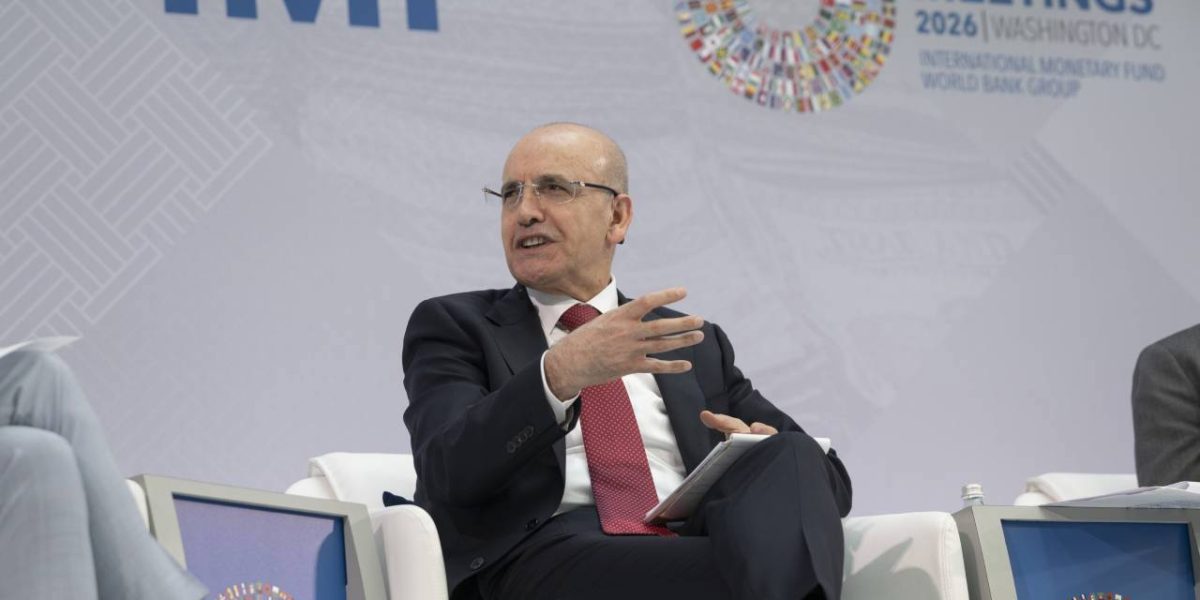
Mehmet Şimşek, appointed by the one-man regime to the Ministry of Treasury and Finance in an attempt to save face ahead of the 2023 general elections, has hit a dead end with the programme he implemented following the IMF’s directives. It is now impossible to conceal that the economic package, dubbed the ‘disinflation programme’ and chosen to cement the anti-labour regime’s alliance with capital, is not working. Even Şimşek himself is aware of the situation; in speeches he delivered at IMF and World Bank summits in the US, he stated: ‘We must invest in reducing risks and diversifying opportunities. We have no choice; we have faced shocks.”
The rosy picture painted by Şimşek, who is also criticised within the government, has crumbled. Once again, war stands in the way of the public funds the government plans to tap into to secure votes in the election and ensure the continuation of the shaky one-man regime. It appears that the war ignited by the US and Israel in the Middle East has taken precedence over election-economy moves such as ‘politically’ increasing social assistance and implementing measures to ease credit access and create temporary relief. The concrete reality, which even official data cannot conceal, remains plain to see: the programme implemented by the regime with Şimşek is not working.
∗∗∗
CAPACITY IS UNUSED, CONFIDENCE IS LACKING
The Central Bank of the Republic of Turkey (TCMB) has published the manufacturing sector capacity utilisation figures for April. The seasonally unadjusted capacity utilisation rate rose by 0.5 percentage points compared to the previous month, reaching just 73.8 per cent in April 2026. The wheels did not run at full capacity in April either. The lowest capacity utilisation rates were observed in the leather sector at 59.7 per cent, the beverages sector at 62.9 per cent, and the machinery and equipment sector at 65.3 per cent. Capacity in consumer goods fell to 71.5 per cent, whilst the rate for durable consumer goods stood at 68.9 per cent. The manufacturing sector’s lack of confidence in the economy persists. According to the data, confidence in the real sector fell by 1.4 points month-on-month in April, reaching a negative level of 98.6. Confidence in the economy among the manufacturing sector hit its lowest level in seven months.
∗∗∗
UNEMPLOYMENT AT ITS PEAK
The country’s chronic problem of unemployment has turned into a monster fuelled by the Şimşek programme. Even the Turkish Statistical Institute’s (TÜİK) unemployment rate has made the country the fourth highest in the OECD. Actual unemployment, however, was calculated at 29.9 per cent in February, close to its peak during the pandemic.
The number of wage earners in industry fell by 156,976 over the past year. Job losses in labour-intensive sectors left tens of thousands unemployed. In the textile, clothing and leather goods manufacturing sector alone, the number of wage earners fell by 121,068 in a single year.
∗∗∗
THE MARKET IS NOT HOPEFULL FOR ŞİMŞEK EITHER
As the capital that the government had protected and nurtured began to feel the effects of the crisis, it turned its back on Şimşek. Even the market, which had placed the most trust in the programme since Mehmet Şimşek’s appointment as Minister of Treasury and Finance, has lost its faith. The expectations of the capital class, which has begun to turn a profit into a loss, have turned pessimistic. According to the Central Bank of the Republic of Turkey’s (TCMB) survey of market participants, the inflation expectation for April, which stood at 2.11 per cent last month, rose to 2.93 per cent. The expected year-end CPI increase for the current year, meanwhile, rose from 25.38 per cent to 27.53 per cent. The inflation expectation for 12 months ahead rose from 22.17 per cent to 23.39 per cent, and for 24 months ahead from 17.30 per cent to 18.02 per cent.
WAGES UNDER ATTACK
The most striking feature of Şimşek’s programme was the suppression of wages and the shifting of the burden of the economic crisis created by the regime onto the shoulders of the people. Whilst wages and salaries were increased by less than the official inflation rate, they did not even cover the cost of food. The minimum wage could only cover 86 per cent of the poverty line of 32,793 lira announced by Türk-İş for March. The minimum wage barely reached a quarter of the poverty line of 106,817 lira. According to DİSK-AR research, the three-month cost of inflation and taxes on workers’ wages amounts to at least 393.9 billion TL.
THE CRISIS LED TO BANKRUPTCY
The number of cases in enforcement and bankruptcy departments has highlighted the scale of the deepening economic crisis in recent years. The total number of cases, which stood at 26,946,126 in 2016, rose to 35,284,514 in 2025. Of the total cases, 33,034,679 were enforcement cases, whilst 4,784 were recorded as bankruptcy cases. Consumer loans reached 3.172 trillion lira, and credit card debts exceeded 3.32 trillion lira. 688 billion 632 million lira in debt is under collection. Over the past 12 months, 2,225 companies have filed for composition. According to the Turkish Union of Chambers and Commodity Exchanges (TOBB), the number of companies established in the country in March 2026 fell by 11.2 per cent month-on-month to 8,379, whilst the number of companies closing down rose by 11.6 per cent to 1,809.
THE COST OF FOOD IS RISING DAY BY DAY
Turkey remains the leader in food inflation within the OECD. According to the unreliable inflation figures from the Turkish Statistical Institute (TÜİK), food inflation stood at 32.36 per cent year-on-year in March. As food inflation rises, the meals of those on low incomes have become smaller. According to a report by the Institute for Social Studies, the cost of a healthy and balanced diet in low-income households rose by more than 20 per cent in the first three months of the year. Just like food inflation, agricultural input costs are also on the rise. Whilst agriculture is under pressure from rising costs, agricultural input inflation recorded an annual increase of 31.55 per cent in February, according to TÜİK.
Note: This article is translated from the original article titled Başekonomist topu ‘çırağa’ attı, published in BirGün newspaper on April 21, 2026.

Bir yanıt yazın